


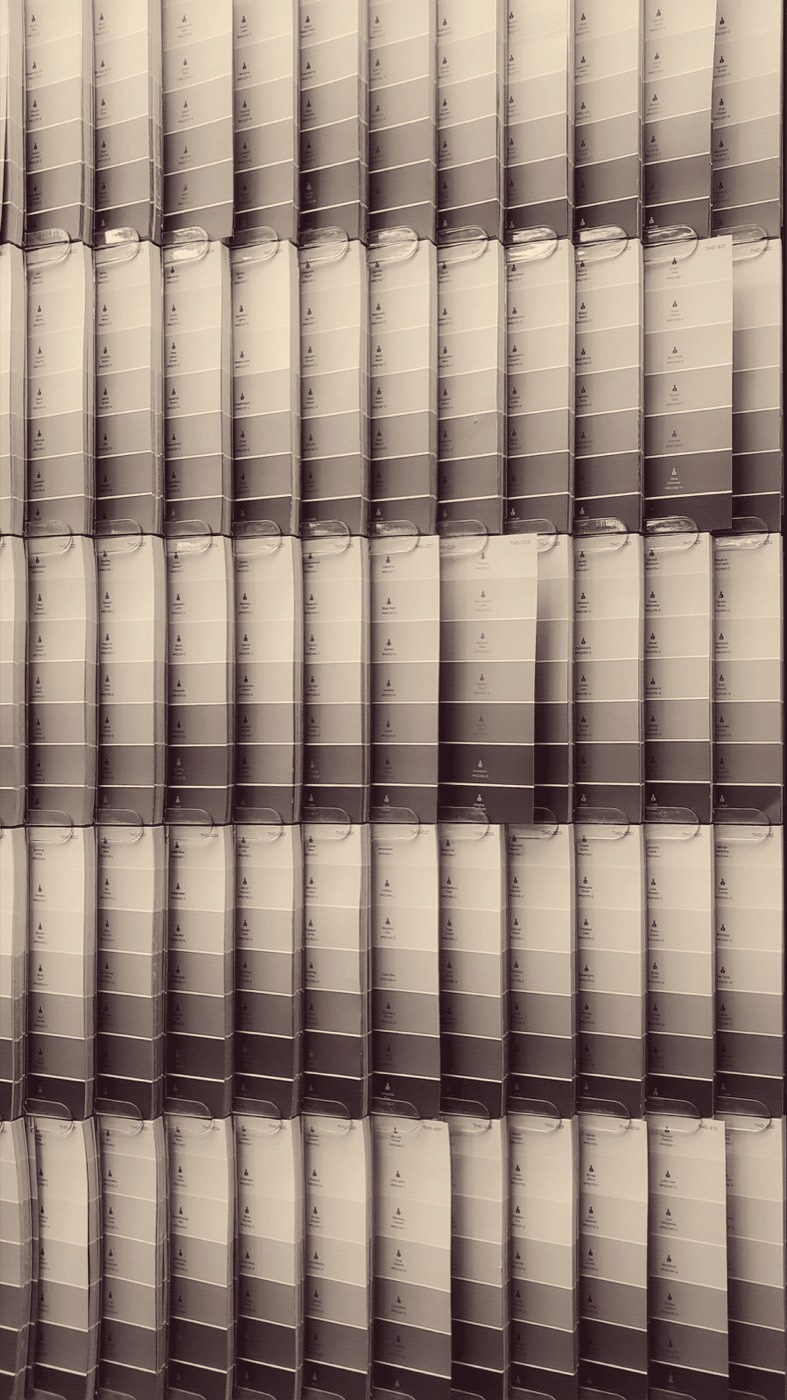

Why one color can look warm in one room and gray in the next, and how to choose a paint that suits the light you have.
Which way the room faces
A north-facing room gets cool, even light all day. Colors lean blue and gray in it, so a white that looked clean in the shop can turn flat on the wall. Warm whites and colors with a little red or yellow in them hold up better.
A south-facing room gets warm light that changes through the day. Almost any color works, and cool shades that would feel cold elsewhere can look fresh here. East-facing rooms are bright in the morning and dim in the afternoon; west-facing rooms are the other way round.
Test on the wall, not the chart
Paint two large patches, or paint sheets of card and move them about. Put them on the darkest wall and the brightest, and look at them in the morning, the afternoon and under the lamps in the evening. A patch the size of a postcard tells you very little.
Look at the patches beside the things that are staying: the floor, the sofa, the curtains. A color is never seen on its own.
Sheen changes the color too
A flat or matte finish hides marks on the wall and makes a color look softer. Eggshell and satin finishes reflect more light, so the same color reads slightly lighter and shows every bump. Trim and doors are usually a step glossier than the walls so they can be wiped.
The ceiling and the fifth wall
A bright white ceiling over a colored wall can make the room feel boxed in. A ceiling mixed from the wall color, with plenty of white added, lets the color carry over the top and the room feel taller.
Want help applying this to a room of your own? Tell us about it.